Tag Archives: Cardiac Rehabilitation

The “E”s

At Cardiac Rehabilitation, we were taught that many of the key factors that impact the workload on a Heart with an “E”… Exercise, Environment, Emotion, Eating… (I’m sure there were others, but I can’t remember them… please feel free to chip in!).

Many of the “E”s are impacted by travel to foreign lands… strange place, unusual climate, different food, etc.  As a result, I think going on a family holiday is a big step in the Cardiac Rehab journey.

A holiday obviously offers an opportunity for some Rest and Relaxation, away from the hassle of day to day life at home / work.  For me, it provides a chance to diversify my exercise routine and build on the base I’ve laid down.  However, I think it offers something more important.  I think it offers the opportunity to embed the change that we’ve been through over the past few months.  I say “we”, this definitely applies for me, but in a small way I think it’ll apply for Louise and the girls too.

The whole, “living with Heart Disease” thing was somewhat sprung on us.  We didn’t have any time to prepare.  One day we were “normal”, the next we were not.  In some way, leaving home as a “Survivor”, being away for a couple of weeks, and then returning a “Survivor” makes it more official, normal.  A little bit like moving house… you need a break of routine to really make it feel like home.

The Magic Kingdom… not sure my Heart could have taken the fireworks and the emotion of the whole thing!

Our holiday plans over the summer were severely impacted by my Heart Attack.  The plan had been to visit Florida and enjoy some of the theme parks we have all heard so much about… you could call it a “once in a lifetime” trip… but when you’ve got growing children, they all are aren’t they!

We decided that a long haul flight, the heat and humidity, the thrills and spills of rollercoasters, driving in a strange place, and the good old American cuisine probably wouldn’t be the best recuperation-aid five weeks after my Heart Attack.  So we spent the summer at home, making the best of what Scotland has to offer.

As it turned out, it had quite a lot to offer.  We enjoyed one of the best summers for many years, I certainly can’t remember a better one since I’ve been living in Sunny Scotland (and I’ve been there for over 17 year).
20131015-092227-am.jpg

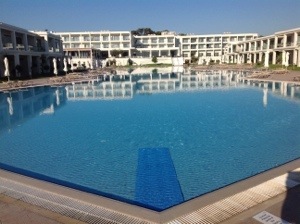
The main pool and hotel complex. Always strangely deserted.

To compensate, we decided to book a “special” trip over the October School Holiday (Now!).  The girls get two weeks off, so it’s enough time to get away… and really get away!  We are in Rhodes enjoying a healthy holiday of sun, relaxation and exercise (in that order).

The “E”s have played quite a major factor so far:

The Environment is much warmer than back at home.  The average temperature so far has been in the high 20 degree Celsius range.  It’s felt hot!  Perfect for lazing around and doing nothing very much!

The Environment impacts everything.  It takes time for your body to acclimatise.  Quite how and when it’ll make a noticeable difference is unknown, until it does!  So, in the short term at least, this provides a need for a certain level of caution.

20131015-092254-am.jpg

The lounging pool. Beautiful, but treacherously chilly!

We have access to several Outdoor Pools and the Mediterranean Sea (I’m sure it used to be an Ocean when I was growing up!).  Both can best be described “refreshing”.  Again, perfect for a cool down if you’ve been lazing around in the sun, but they’re a little too bracing for my liking.  I’ve never particularly enjoyed swimming in cold water, but I suspect a fast immersion in any of these could be the last thing I do!  Definitely to be avoided!

There are guided Mountain Bike rides twice a day.  Definitely for me!  The temperature plays a key factors in these too, as well as the terrain over which we ride (I know this doesn’t start with an “E”!).  Being on the competitive end of competitive, the key thing for me is to ride at my own pace, to not worry about what everyone else is doing, and to listen to my body (and my heart rate monitor!).  My body has definitely reacted differently.  I guess I have to learn my limits again given the new conditions.
20131015-092305-am.jpg

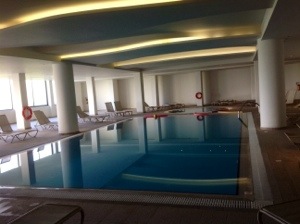
Dad’s pool… before the kids have woken up at least!

Given I can’t swim in the outside pools, the Indoor Pool has become “Dad’s Pool”.  Unfortunately there are some other guests that might also lay claim to it, so I have to pick my times carefully!  It’s not big, probably 10m in length, but it’s enough for me to practice my breathing. If it really were mine I’d keep the temperature a few degrees cooler, and get some fresh air circulating in the room.  It is as close to a sauna as I’m willing to get right now!  Hopefully it’ll serve its purpose.

We’re in a great place to chill out, relax and enjoy a break.  There is a lot to do.  I just need to make sure I don’t overdo it!

A User’s Guide to Cardiac Rehabilitation

After 8 weeks and 16 sessions, I’ve finished my Cardiac Rehabilitation Programme.  Yahoo!

The course is complete however graduation will need to wait for my final assessment – to measure my progress since I started back in mid-July – I’ll do this in a couple of weeks.

A huge thank you to all the staff!

Rehab Team 1

The Rehab Dream Team: Kirstein, Maggie, Brenda and Bernard

The experience has been a wholly positive one for me.  Helping me to come to terms with the whole Heart Attack experience and get back to some sort of normal routine (although it will change again now Rehab is finished!).

One of the things I’ve never understood about the Cardiac Rehab is why more (eligible) people don’t make more use of it?

After you’ve had a Heart Attack, or been treated for some sort of Heart condition, you would imagine that you’d be past the denial stage – the game is up!  For many of us, we are in the fortunate position to make changes that will improve (and extend) our lives.  So why doesn’t everyone?

From my perspective, it’s time to make a positive change!  The Cardiac Rehabilitation Programme is what’s on offer to help… so take advantage of it!

I thought Rehab was a really important opportunity to take action, regain control, learn and reflect.  I’m therefore dedicating this update to de-mystifying Cardiac Rehab for people that may need it in the future…

The Structure of the programme

There were 3 distinct sections to Cardiac Rehab which ran two sessions a week:

  1. Exercise – 30 minutes of exercise tailored to your personal capability (using Treadmill, Cross-Trainer, Step Machine) with a facilitated warm up / cool down to get your heart working
  2. Relaxation – 30 minutes of relaxation to help you learn how to take control and chill out
  3. Education – 60 minutes of education on a variety of Heart & Lifestyle topics (once a week only)

In addition, your first (and last) session will be a Physical and “Happiness” Assessment.  You will be asked to do a “Beep Test” and to answer some questions on your state of mind (e.g. Are you happy?  Yes / No) .

Wear clothes that are suitable for exercising in – I went for full gym kit, but it really depends on what you’re comfortable in.  Don’t worry, it’s definitely not a fashion parade!

Free up time

The Cardiac Rehab sessions will take a minimum of 2 hours per week.  That’s if you just do the Warm-Up, Exercise and Cool-Down.  You’ll need to add an extra 1 hour per week for the Post-Exercise Relaxation and another hour for the Education session.  Factor in the journey to and from the hospital, and the time it takes to shower and change, and you’re looking at a fair commitment of time over the 8 weeks.

Personally, I considered this an investment in myself, in my future, for myself and my family.  A long overdue investment in my health and wellbeing.  Worth it?

Before you start

If you’ve followed the guidance, you will have been exercising regularly since leaving hospital.  Starting very gently, maybe 5 mins twice a day, and building up slowly.  You may be up to 30 mins twice daily, and feeling good, stronger and fitter. You will hopefully have gained confidence and be ready for the next stage.

As you start Cardiac Rehabilitation, you may well feel like you’re being held back, forced to go backwards even.  You will likely start your exercise sessions with 1 to 1 or 2 to 1 (minutes on a Heart Exercise Station to “rest”), slowly working up the amount of time you spend working your heart.

As you demonstrate your fitness and strength, the duration of exercise will steadily increase.  “Steadily” being the operative word!

Monitor your status

The Exercise sessions start and finish with Pulse and Blood Pressure measurements.  Changes in medication are also recorded.  I’ve found seemingly small changes in medication have had a big impact on how my heart responds to exercise – well worth monitoring so exceptions can be identified more easily.

I used my own Heart Monitor to keep an eye on my pulse throughout each exercise session.  It’s not really a requirement as there are monitors on most of the machines, but personally I found it reassuring to know where I was against my upper limit.

One of the key outcomes from Rehab will be to have an increased awareness of what you can safely do and how you feel when exercising at the right level of intensity.

State of the Art Gym

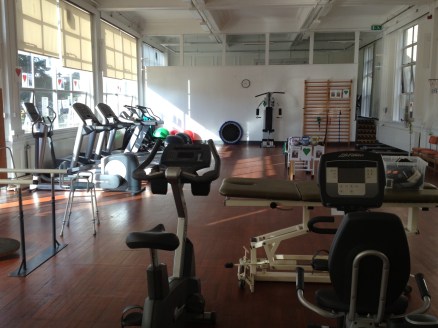
Our “State of the Art” Cardiac Rehab Gym

The warm up

I found the warm up quite uncomfortable the first couple of times I did it (embarrassing uncomfortable not physically uncomfortable).  If you imagine the lightest, lowest impact aerobics ever, and then tone it down (right down) you’ll get a sense of the level of exertion.

I realised after a while that it is, after all, a warm up for a group of people suffering from Heart Disease.  Gentle is probably the way forward!

I got used to the Warm Up after a few weeks.  I guess this is a reflection on how well you’re coming to terms with toning down your behaviour to take account of the fact that you’ve had a Heart “Event”!

The cool down is similar, but even more gentle!

Pace yourself

You need to bare in mind that 8 weeks is quite a long time.  Although I’m sure you’ll be keen to get back to normal, it’s an opportunity to build up at a sustainable pace.  You will make progress, just don’t be in too much of a hurry.

If someone turns down the resistance on your work-out machine, reducing the intensity of your work out (and they may well do!), take a deep breath and, if you’re feeling strong, increase your speed.  You can still do the same amount of work, but in different ways.

Build confidence

You’ve probably already realised that the aftermath of a Heart Attack isn’t all about you.  To a large degree, the people that you’re close to, that you interact with from time to time are more important.

Part of the recovery process is giving everyone (including yourself) time to re-build confidence in what you can safely do, to trust that you’re not going to do yourself damage or put yourself in danger again.

Well, the Cardiac Rehab Team are people too.  They too will build confidence over time, but it does take time.

Do your homework

I think it’s important to continue to exercise regularly while you’re on the Programme.  That means continuing to exercise at home, between Rehab sessions.  That way you’ll really feel the benefit of the exercise and build your strength over the duration of the course.

Relaxation

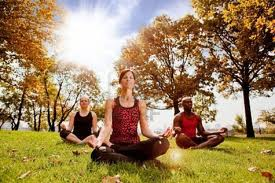
The Relaxation sessions followed a common routine…  participants either lie on a bed / floor mat, or sit in a chair, and start by focussing on deep breathing, followed by tensing and relaxing muscles from Toe to Head.  The process is facilitated by an instructor reading a well-worn script.

There then followed a variety of other relaxation techniques, again following instructions.

Imagine yourself in a warm, comfortable place…

To be honest, for the last few weeks, I switched off by the time the initial relaxation was complete.  Overly relaxed perhaps?  I have to admit, I was guilt of being the rogue snorer on one occasion (one that I’m willing to own up to anyway!).  I definitely wasn’t the only one!

The relaxation techniques are useful for winding down in everyday life, both to take a few minutes out from a stressful day, or to help respond positively to difficult situations (deep breath, drop your shoulders…).

Education Sessions

The education sessions included:  Diet, Medication, Preparing for the future, Stress Management, Anatomy of the heart, Getting back to “normal”.

One of the major benefits of Cardiac Rehab is having the opportunity to talk to other people in a similar situation.  As the members of the group change over the 8-weeks, you will meet and share experiences with people at different stages of their Rehabilitation.  This is informal, but valuable and rewarding.  I really enjoyed seeing people’s confidence growing week by week.

And then it’s over…

I’m more or less on my own now, at least for the time being.  I already have a gym assessment scheduled and I’ve signed up for swimming lessons.

untitled (31)

Swimming… yes. Butterfly… I don’t think so!

For me, Cardiac Rehab created some structure to the recovery process.  I had come through my initial 4-week recuperation, and was ready to return to work.  Cardiac Rehab made me focus on myself 2 mornings a week.

Memories of the initial feelings to the Heart Attack are quickly forgotten.  It’s all too easy to fall back into bad habits, to proceed as if nothing has changed.  The 8 week Rehabilitation process provides some extra time to fall into good habits, to seek guidance and support.

It was also really nice to be part of a little group.  Although there were a diverse range of individuals participating, we all had something in common, none of us were strange (at least not because of our Heart conditions!).  Most importantly, I think everyone genuinely cared about each other.

Good luck to my fellow participants current and future!!!

Artists impression of my Cardiac Rehab group!

The summer’s over

The summer’s over.  The girls have gone back to school, marking the end of a rather different summer holiday.

Thanks to my little incident, Disney World was exchanged for Codona’s Aberdeen and Daytona Beach for Cullen.  Thanks goodness the weather was good!  I think fun was had by all.

Who needs Disney World?!

Right on cue the days are getting noticeably shorter and there has definitely been a turn in the weather.  The last three mornings have been greeted with a heavy, persistent fog.  Rather than the refreshing blanket of moisture that started the balmy days of summer, there is no obvious end to the mist, no sun to brighten up our day, just the promise of the darkness and damp to come.

As we enter a new phase, I fear it’ll be easy for the memory of my Heart Attack to fade.  I’ve met several people recently who have been through similar experiences and can’t remember the details of the event.  Everything has gradually returned to normal, and the old bad habits have crept back in.

I am very keen that this doesn’t happen to me.  I can be very focused when I want to be, but stamina is not a strong point and I’m not the best “completer / finisher”.  The new health and fitness regime is going well, but I need to make sure it stays that way!

This doesn’t describe me very well! I can do it but it’s hard work.

The current phase of my Cardiac Rehab will be finished in 3 weeks which will mark another big change.  I know it’s going to be increasingly difficult to get motivated to exercise when it’s cold, dark and wet.  I’m going to have to find myself some new forms of exercise to keep my interest up…

It’s a marathon not a sprint!
(and, incidentally, I believe you’re more likely to be successful if you dress appropriately!)

I’ve never been to an Exercise Class at a Gym, but this could be a good time to start!

Developments

Stress, noun
1.  Pressure or tension exerted on a material object:
2.  A state of mental or emotional strain or tension resulting from adverse or demanding circumstances:
3.  particular emphasis or importance

A typical Cardiac Rehabilitation Relaxation session

At the end of each Cardiac Rehabilitation session, we have 30 minutes of “relaxation”; gentle music, overlaid with softly spoken instructions to focus on eliminating tension from different parts of the body (“now we’ll focus on our thighs…”), breathing deeply and generally chilling out.

It feels good, indulgent.  It rounds off the Rehab session before heading out into the big wide world.

According to Wikipedia; “the body’s way to respond to stress is by sympathetic nervous system activation which results in the fight-or-flight response”

I’m not entirely sure where lying down with your eyes closed, chillaxing fits in to this evolutionary response – I’m sure it will become clear in time, but we haven’t done our “Stress Management” education session yet!  (It was actually supposed to be last week, but it got switched with “Medication” at the last minute!)

I guess that we are made to deal with our challenges face on, or to turn tail and run away!  Biologically, we’re not made to dwell some things too much.  Relaxation is a good way of re-establishing a sense of calm and stability after doing what you need to do.

The bottom line is, we all face stressful situations of differing degrees every day.  They cannot be avoided.  Even locking yourself away can be stressful for most of us (“What’s going on outside?”)

untitled (20)Which brings me to my stress of the week…

We recently received a Planning Permission notice for a house to be built at the top of our garden.  Seven houses in total, in two plots, but it’s the one that will overlook our house, replacing a nice wooded area that I’m concerned about.

Fortunately, there’s a simple solution that will allow the development to proceed without giving us too much cause for concern.

Unfortunately, the people that have applied for the Planning permission seem to think it’s OK to ignore us, and have been doing so for several years!

It’s very frustrating!

I find I need to think relaxed, warm, calming thoughts each time the potential development enters my mind…  slow, deep breaths…  “You are feeling relaxed”.

We will fight.  There is a course of action we can follow.

I will practice my relaxation, and hope they have a section on “responding to unwanted planning applications” as part of the “Stress Management” session when it’s eventually held!

Another minor milestone (FD +47)

I feel like I’m making real progress on the exercise front.  Some of it is down to exercising.  Some of it is down to understanding the kit and exercising better.

Although I’m still a complete novice, I feel like I’m in a position to provide some advice on cycling (at least cycling in my garage):

Cycling Lesson 1:  It hurts less if you have the right kit!

The shorts, gloves and shoes all made a substantial difference to last nights “ride”.  Why didn’t I think of it earlier!

Yesterday saw the introduction of another training aid too…

I got a tip from a guy at work to try out a Sufferfest video.  Specialising in Cycling Training Videos, they have the motto:

“I will beat my ass today to kick yours tomorrow”  (IWBMATTKYT for short)

They have a range of “entertaining” videos targeted at the stationary cyclist market.  They create training sessions where you follow / copy / compete with professional cyclists performing in competitions (World Championships, Tour De France, etc., listening to fast music, and following instructions “shouted” out via text on the computer screen.

http://vimeo.com/46131597

It might sound strange, but the videos provide some useful pointers for the novice cyclist and also create a major distraction from the clock.  In my limited experience, the biggest challenge with inside cycling is clock watching.  Every minute seems to last forever!

For me the intention is clearly not to have a Sufferfest, in fact not to suffer at all!  That’s not really what my exercise is about right now.  For me I’m treating it more as a Recoverfest (Trade Mark pending!).

Irrespective of what the on-screen cyclist does, or the instructions I’m given, the Heart Monitor is the most critical piece of equipment for me.  Keeping below my 118 bpm threshold is essential.

In time, I’m looking forward to testing / pushing the boundaries, but I have to keep reminding myself that I’m still only in week 3 of Cardiac Rehabilitation. Much as it would be nice to kick Bradley Wiggins’ ass in a Time Trial (albeit virtual), my goal has to be to put in the miles, to get myself fit and strong, to lay the foundation for the future.

Anyway, the video worked for me.  I would highly recommend checking out The Sufferfest if you’ve not discovered them already.

Breaking news…

All the exercise and hard work has resulted in another minor milestone for me at Cardiac Rehabilitation today…

drum roll…

wait for it…

I was allowed to jog on the treadmill!!!

I’ve got another 5 weeks of Rehab to go.  I’m hoping I might be able to fly by the end of it!

Man-flying-over-sleepers5

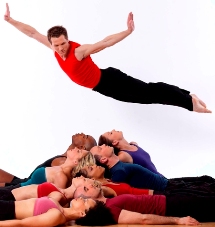
Someone’s going to get hurt!

It’s never too soon

No-one ever thinks they will get impacted by Heart Disease.  We live in blissful ignorance until one day, if they’re lucky, they get a “warning”, a “wake up call”.

Many aren’t that lucky.

In 2010, over 45,000 people under the age of 75 died of Heart Disease in the UK.

That’s certainly how it was for me.  I was bullet-proof.  Until I wasn’t.

Once a week, the Cardiac Rehabilitation sessions have an hour of education.  I consider this the “Community Service” session, where I do the time for the crimes I’ve committed in the past.  The same crimes as many people, but I got caught!

This morning we talked about the anatomy of the heart.  We covered much of the same ground when I was in hospital (see “You are what you eat“).  I’ve had 5 weeks to think about what I could or should have asked… our questions and concerns were on a completely different level back then.

What I learnt today…

atheroma_zoom1

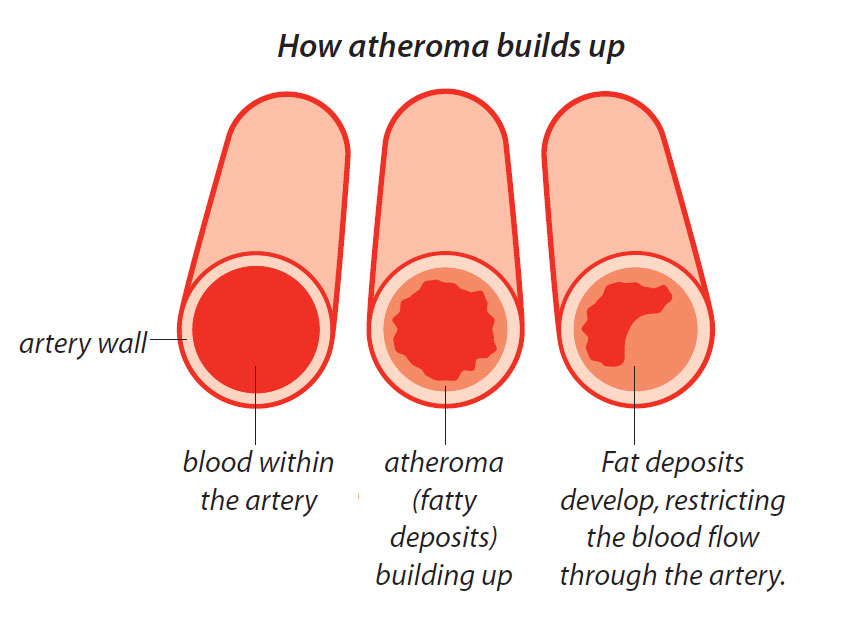
  • The reason why atheroma builds up in some arteries and not others is not known
  • The build up can start early (in your teenage years)
  • Once it’s there, there’s nothing that can be done to reverse the build-up of atheroma
  • It can only get worse, not better (drugs can help reduce the associated risk, but don’t reverse the build-up either)
  • The only way of assessing the build-up is by performing an angiogram which itself carries a risk of 1 death in 1,000 from Heart Attack or Stroke
  • Prevention is the best strategy
  • It’s too late for me to adopt this strategy (but I knew that already!)

What’s happened to me could happen to anyone.  It’s never too soon to become aware.  Never too soon to take evasive action.

I know it doesn’t seem real, particularly if you’re young, fit and healthy.  It won’t.  Until it is.  And then it’s too late.